
WISDOM TOOTH TREATMENT
Symptoms Of Wisdom Teeth Removal
Here are some common symptoms that may indicate the need for wisdom teeth removal:
Jaw Pain and Stiffness
As wisdom teeth erupt, they can put pressure on the surrounding jawbone, causing pain, discomfort, and stiffness in the jaw area.
Swollen and Inflamed Gums
The eruption of wisdom teeth can lead to swelling, redness, and inflammation of the gums around the area where the teeth are emerging.
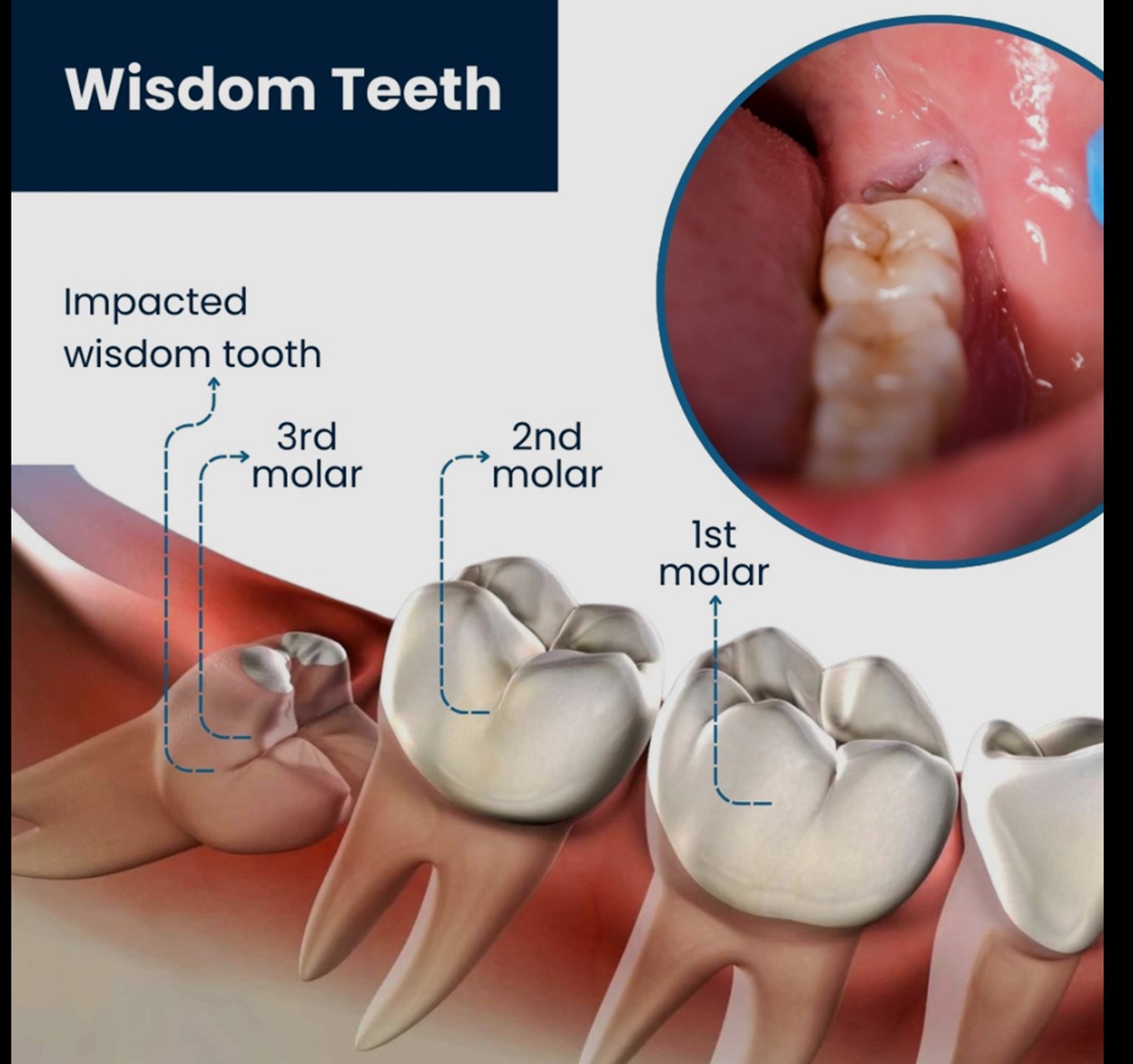
Difficulty Opening the Mouth
The swelling and inflammation caused by impacted wisdom teeth can make it challenging to open the mouth fully, limiting jaw movement and causing discomfort.
Bad Breath or Unpleasant Taste
Wisdom teeth can trap food particles and bacteria, leading to bad breath or an unpleasant taste in the mouth, especially if they are partially erupted.
Earache or Headache
The pressure and inflammation caused by impacted wisdom teeth can sometimes radiate to other areas, resulting in ear aches or headaches on the affected side.
Bleeding or Irritated Gums
As wisdom teeth attempt to emerge, they can cause the gums to become irritated, leading to bleeding or sensitivity when brushing or flossing.
Benefits of Wisdom Tooth Treatment
Prevents Dental Complications
Wisdom teeth can cause various problems if left untreated, such as infections, cysts, damage to adjacent teeth, and gum disease. Removing them can help prevent these complications and protect your overall oral health.
Relieves Pain and Discomfort
Impacted or partially erupted wisdom teeth can cause significant pain, swelling, and discomfort. Extracting them eliminates these issues, provides relief, and allows you to resume normal activities.
Improves Oral Hygiene
Wisdom teeth, especially those that are impacted or partially erupted, can be difficult to clean properly, leading to the accumulation of bacteria and an increased risk of tooth decay and gum disease. Removing them can improve your ability to maintain good oral hygiene.
Prevents Bite Misalignment
Wisdom teeth can cause overcrowding and shift the positions of other teeth, leading to bite misalignment and potential jaw problems. Extracting them can help maintain proper tooth alignment and bite.
Reduces the Risk of Cyst Formation
If left untreated, fluid-filled cysts can develop around the crowns of impacted wisdom teeth, potentially damaging the surrounding jaw bone and adjacent teeth. Removing wisdom teeth eliminates this risk.